A hybrid workplace strategy is your plan for how and when your team works from the office, and how much space that actually requires. For an Australian SME, the hard part is not defining hybrid work. It is the practical calls: how many office days to expect, how to read your own utilisation, and how big a footprint to commit to.
Already across the basics? If you want the broader explainer, start with our guide to what hybrid work is in 2026. This article picks up where that one leaves off. It is a decision guide for founders, people leads and office managers who need to turn flexible work into office-day, space and lease decisions, using Australian data rather than guesswork.
What Is a Hybrid Workplace Strategy?
A hybrid workplace strategy is a documented approach to blending in-office and remote work. It sets expectations: which days people come into the office, why those days matter, and how the business supports flexible work without losing company culture or coordination.
Think of it as three connected decisions. First, how employees split their week: the hybrid work model and office days. Second, how much space you commit to, and what kind. Third, how you will know whether it is working. Skip the space question and you either pay for empty desks or cram everyone in on peak days. Done well, hybrid working meets employee expectations for flexibility while keeping your hybrid workforce connected to a shared workplace.
Hybrid Work vs Remote Work: What It Means for Your Space
The quick version: remote work happens away from a central office, often full-time, while a hybrid team splits the week between office and home. That difference is what drives how much space you actually need.
What matters here is the property call. A fully remote team needs almost no desks. A hybrid team still needs a place to gather, run workshops and build company culture, just less of it than a traditional office. Your model decides how much space you need, and which days you will actually use it. Blending remote and office work also shapes everyday habits, from work hours to how teams coordinate across a remote location.
Why Hybrid Work Matters for Australian Businesses in 2026
Colliers’ 2026 Asia Pacific workplace research describes hybrid work as a mature reality across much of the region. The focus now is on designing offices that foster engagement, attract talent, and support retention. For Australian SMEs, the useful question is not only how many days employees come in, but what the office helps them do together.
Flexible work is now part of employee expectations rather than a perk, and for many staff it connects directly to well-being and mental health, both at work and in their personal life. (Colliers, 2026 Asia Pacific Workplace Insights)
The numbers add context. The AHRI Hybrid and Flexible Working Practices in Australian Workplaces 2025 report found that the most common arrangement was three days a week in the office (32% of employers). Forty-five per cent of employers said hybrid work had a positive effect on employee productivity, while 11% reported a negative effect. The most-cited advantages were better work-life balance (65%), stronger retention (44%), and easier attraction of talent (41%).
Space tells a similar story. CBRE Australia’s 2025 Office Occupier Survey puts average office utilisation at 52% across the week, rising to 67% on peak days. The share of employees using unassigned seating rose from 30% in 2019 to 53% in 2025. (CBRE, 2025 Australian Office Occupier Survey)
Together, these figures show why weekly averages can hide peak-day pressure. Treat national data as context, then track your own peak attendance and room use before changing your footprint. A benchmark is a starting point, not proof that a specific number of desks is right for your team.
Choosing Your Hybrid Work Model and Office Days
There is no single hybrid work model, but the common types of hybrid work reduce to a handful of options. Pick the one that fits how your team delivers work, not the one that sounds tidiest. Each option balances office-based days with flexible work across your hybrid team.
What you are really choosing is a cadence: how many in-office days, which days, and why they are worth the commute. The focus below is how each model shapes your office days and space, rather than a deep definition of each.
| Model | How it works | Best for |
|---|---|---|
| Fixed hybrid | Everyone comes in on set days, such as Tuesday to Thursday. | Teams that value predictable collaboration and simple scheduling. |
| Flexible hybrid | Employees choose office days within an agreed minimum. | Trust-based teams and roles with varied work schedules. |
| Office-first | The office is the default; remote work is the exception. | Work that depends on in-person coordination. |
| Remote-first or as-required | Remote work is the default; people use the office for specific purposes. | Distributed teams that gather for anchor days or planned sessions. |
Fixed Hybrid
Everyone works the same set of days in the office, such as Tuesday to Thursday. It suits teams that value predictable collaboration and simple scheduling. The trade-off is less flexibility around individual work schedules.
Flexible Hybrid
Employees choose their office days within an agreed minimum. It can work well for trust-based teams and roles with varied schedules. It also leaves room for personal circumstances and employee preferences. Without coordination, though, the office can feel quiet or unpredictable.
Office-First
The office is the default and remote work is the exception. These teams are largely office-based, which fits work that relies on in-person planning and helps build a strong shared culture. The trade-off is peak-day pressure on your space.
Remote-First or As-Required
Remote work is the default, and the office is used for specific purposes. It suits distributed teams that gather for anchor days, workshops, or client meetings. People might work from home, a coffee shop, or any remote location, so the office earns its keep only when there is a real reason to meet.
Many Australian SMEs choose a fixed or flexible model with two or three anchor days. That can support connection without forcing a five-day office routine on everyone.
How to Build a Hybrid Workplace Strategy, Step by Step
Use this sequence. Each step informs the next.
Start with Your “Why”
Name the outcome first. Are you aiming for stronger retention, lower overhead, higher productivity, or a wider talent pool? Your goal shapes each later decision. A business reducing property costs will design differently from one focused on keeping its best people.
Consult Your Employees
Ask before you mandate. Short pulse surveys and team conversations can surface employee preferences: focus time at home, collaboration in the office, or help with commuting. Consulting early also manages expectations and can reduce resentment about a top-down return-to-office policy.
Choose Your Model
Match a model from the table above to your goals and your team’s work. Be honest about coordination needs. Work that depends on quick back-and-forth may benefit from more in-office time; deep, focused work may not.
Set the Policy
Write it down. Cover core work hours, anchor days, remote-work expectations, and how requests are handled. Some eligible employees can request flexible working arrangements. Employers generally need to respond within 21 days and may refuse only on reasonable business grounds, following the required process. Check the current Fair Work Ombudsman guidance and reflect it accurately in your policy.
Pick the Right Tools
Your hybrid team needs to collaborate whether people work remotely or come into the office. That usually means the right collaboration tools: reliable video meetings, shared messaging, cloud document access, and project management software so work stays visible.
Add desk or room booking so people know space is available, and shared calendars that show work schedules so everyone can see who will be in the office on which days. Good virtual collaboration keeps remote and in-office staff on the same page. Set sensible data-security practices for employees working across locations.
Design the Space and Office Experience
If employees come in two or three days a week, make those days count. Provide collaboration zones, bookable meeting rooms, quiet areas for focused work, and fewer rows of permanently assigned desks. Aim for a work environment that earns the commute.
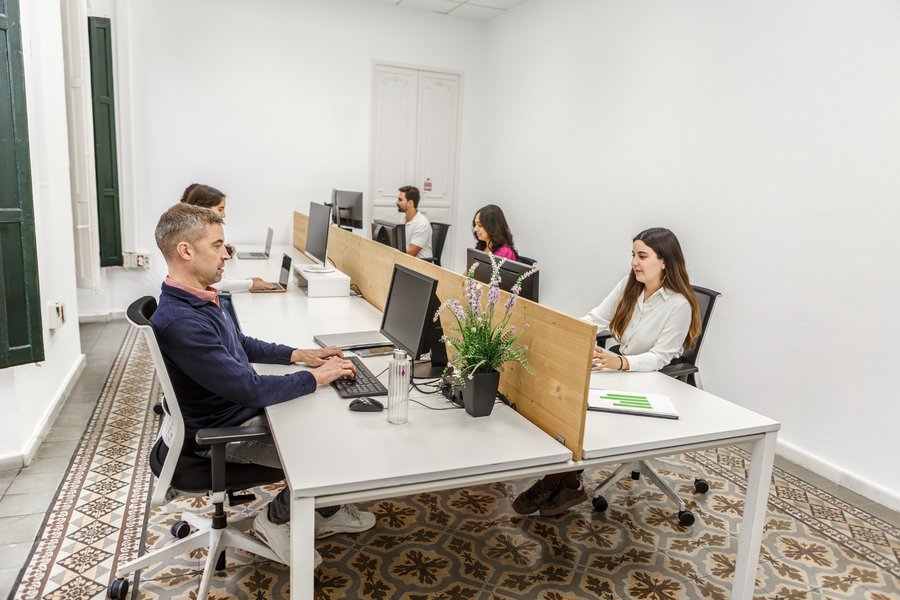
RLB’s 2026 analysis describes a shift from fixed, desk-centric layouts toward flexible, collaborative, technology-enabled workplaces; it also reports that only 16% of desks were occupied for more than five hours a day. Use your own attendance and task data to decide how much space you need rather than applying a universal desk-to-employee ratio.
Measure and Iterate
A hybrid strategy is never finished. Track space use, employee experience, and business results, then adjust. The metrics below are a useful starting point.
Benefits of a Hybrid Workplace
The benefits of hybrid work are real when the strategy is deliberate, not accidental.

Better work-life balance. AHRI’s 2025 report names work-life balance as the most-cited advantage of hybrid work (65%). Fewer commutes can also give employees more time back in their week, which can support well-being and mental health. For many staff, an improved work-life balance is the whole point.
Stronger retention and attraction. In AHRI’s 2025 survey, employers cited improved retention (44%) and ability to attract candidates (41%) as advantages. For an SME competing with larger employers, flexibility can be a useful lever. Hybrid work that meets employee expectations tends to drive higher employee satisfaction and job satisfaction, which feeds back into retention.
Cost savings. CBRE reports average office utilisation of 52% across the week, but your own peak-day pattern matters more than a national average. Measure attendance before making a footprint decision, since right-sizing your footprint is where the real cost savings in a hybrid workplace tend to come from.
A wider talent pool. Hybrid and remote options can help you hire beyond a single commuting distance, which matters when the right skills are scarce. A distributed hybrid workforce also lets people pick the work environment that suits each task, which can boost productivity on focused work.
Common Hybrid Work Challenges and How to Solve Them
Hybrid work brings real challenges, but many can be addressed through thoughtful team and workplace design.
Disconnection
AHRI’s 2025 report identifies disconnection between colleagues as the most-cited disadvantage of hybrid work (57%). Plan anchor days around collaboration, relationship building and team rituals, rather than asking people to commute for work they could do just as well at home. The casual hallway conversations that build trust are harder when people are rarely physically present. Isolation can also weigh on the mental health of remote workers. Check in regularly with anyone who works remotely for most of the week.
Weaker Collaboration
AHRI respondents also cited staff collaboration as a challenge (38%). Create shared office days for work that benefits from in-person interactions, and make sure remote employees can take part in decisions and team meetings. Strong team collaboration depends on including the people who are not in the room, so lean on virtual meetings and shared notes to keep everyone on the same page.
Proximity Bias
Employees with more office visibility and in-office presence can get noticed more than remote colleagues. Train managers to assess outcomes rather than office presence, and keep performance and promotion criteria clear.
Performance Monitoring
AHRI respondents cited monitoring performance as a challenge (35%). Set clear goals and review delivered work rather than relying on surveillance, hours logged, or online status indicators.
Security
A distributed team needs appropriate device management, strong authentication, and basic security training. Make the secure way to work remotely clear and easy to follow, especially for employees moving between a home office, the workplace and the occasional coffee shop.
The Role of the Office and Coworking Space in a Hybrid Workplace Strategy
Hybrid work does not make the office irrelevant; it changes its role. The office becomes a destination for work that benefits from being together, such as in-person collaboration, culture-building, and client meetings. It is also where relationship building and spontaneous hallway conversations happen most naturally.
For SMEs wary of long commitments, a flexible or serviced office can help right-size the space decision. Workit Spaces describes its Bourke Road, Alexandria hub as a 9,000 sqm site with offices, desks, coworking, and other facilities. Its private and serviced office space suits teams that want a fixed base, while its wider coworking space in Alexandria works for lighter, flexible use. Check the provider’s current terms directly before making a commitment.
Flexible options can also help with variable attendance. Workit lists day passes, virtual offices, bookable meeting rooms, an auditorium, and media studios. These can support overflow and purposeful team gatherings without requiring every employee to have a permanently assigned desk. In practice, a hybrid team might book a meeting room for its weekly anchor day and send overflow staff in on day passes when attendance spikes. For planned team gatherings, explore Workit’s meeting rooms as part of your hybrid office setup.
How to Measure Hybrid Workplace Success
You cannot right-size space you are not measuring. Track attendance, room bookings and how people rate their office days across three areas.
Workplace Utilisation
How full is the office, and on which days do employees actually attend? Desk and room booking data, or a simple sign-in, shows how much time in the office your team logs and whether your space matches real attendance. CBRE’s 52% weekly average is useful context, not a target for every business.
Employee Experience
Run regular pulse surveys on work-life balance, connection, and whether office days feel worthwhile. Watch retention and job satisfaction as longer-term signals, alongside what employees tell you directly.
Business Impact
Tie results back to your original goals and business needs: productivity, output quality, and overhead per person. If property costs fall without hurting delivery or team experience, the strategy may be working.
Review the data quarterly. Hybrid patterns change, so your office space and policy may need to change with them.
Frequently Asked Questions About Hybrid Workplace Strategy
These are the questions SMEs ask most when setting a hybrid strategy. Here are the direct answers.
What is the hybrid workplace?
A hybrid workplace is one where employees split their time between a central office and a remote location, usually home. Some days are worked together in person, others remotely. The goal is to match each task to the setting that suits it best.
Is hybrid the same as remote?
No. Remote work happens almost entirely away from a central office, often full-time. A hybrid team keeps a regular office presence, coming in for set days or specific purposes, so it is a blend rather than fully remote.
What does “hybrid location type” mean?
“Hybrid location type” is a label used in job ads and HR systems. It flags that a role mixes on-site and remote work, rather than being fully office-based or fully remote. Expect a set number of office days each week, with the rest worked from home.
Which is better, WFH or hybrid?
It depends on the work and the person. Full WFH suits focused, independent tasks and can protect work-life balance by cutting the commute. Hybrid adds in-person collaboration and connection, which is why a hybrid model is the most common arrangement among Australian employers.
What is hybrid mode in a job?
Hybrid mode means the role is done partly in the office and partly remotely. A common pattern is two or three days in the office and the rest from home. The exact split depends on the employer’s hybrid work model and policy.
The questions below are the practical ones SMEs ask when turning those basics into a plan.
How many office days should an SME have?
There is no fixed rule, but two to three anchor days is the most common pattern in Australia. AHRI’s 2025 report found three days a week was the most common arrangement. Choose days that cluster collaboration, then confirm the pattern against your own attendance data.
How much office space does a hybrid team need?
Less than a traditional one-desk-per-person office, but size it to your peak day, not your weekly average. CBRE puts average utilisation at 52%, rising to 67% on peak days, so plan for the busy day and use flexible overflow for the rest.
Should an SME sign a long lease for hybrid work?
Not until your attendance pattern is stable. Hybrid demand shifts, so a long fixed lease can lock you into space you do not use. Flexible, serviced or coworking space lets you right-size while you learn your real pattern.
How do you make office days worth the commute?
Reserve in-office time for work that benefits from being together: workshops, planning, onboarding and client meetings. If a day could just as easily happen from home, it probably should.
Bringing Your Hybrid Workplace Strategy Together
A good hybrid workplace strategy is straightforward to describe and takes thought to implement: choose a model, write the policy, equip the team, right-size the space, and measure as you go. Start with your goals, consult your people, and use Australian data as context rather than a substitute for your own evidence.
If the “where” part is your sticking point, flexible space can reduce the risk of committing to a long-term footprint too early. Explore flexible office options in Sydney at the Workit Spaces Alexandria hub, then enquire about a tour or day pass so your team can assess the fit before committing.