

Is a Coworking Space vs Serviced Office Actually Worth Your Money?
When weighing up a serviced office vs coworking space, the decision often comes down to one thing: cost. But the sticker price rarely tells the full story. Many businesses sign up for a workspace based on the monthly rate alone, only to discover a string of extras quietly chipping away at their budget.
Whether you’re a freelancer hunting for a hot desk in Brisbane or a growing firm eyeing a private office in Sydney’s CBD, understanding the true cost of each model is what separates a savvy business decision from an expensive mistake. Not sure which workspace model fits your business? Our guide to coworking spaces is a good place to start. This guide breaks it all down, clearly, honestly, and with real Australian figures, so you can choose the right workspace with confidence.
Key Differences Between Serviced Offices and Coworking Spaces
Two Models, Two Very Different Cost Structures
At their core, serviced offices provide a private, fully managed workspace on an all-inclusive contract, while coworking spaces offer a shared, flexible environment on a membership basis. The former prioritises privacy and predictability; the latter prioritises flexibility and community.
Here’s how the two office types compare across the factors that matter most to your bottom line:
| Feature | Serviced Office | Coworking Space |
| Lease type | Short-term, rolling contract (often 1–3 month minimums, depending on provider) | Membership (daily, monthly, or annual) |
| Privacy | High, dedicated private offices | Low to medium, open plan with optional private offices |
| Furnishings | Fully furnished, move-in ready | Furnished shared areas; private offices vary |
| Utilities included | Yes, bundled into the monthly rent | Yes, included in membership |
| High-speed internet | Included | Included |
| Reception services | Included in most packages | Limited or add-on |
| Meeting rooms | Included (set hours) | Usually charged separately |
| Mail handling | Included | Available as an add-on |
| Professional address | Prestigious CBD address included | Included with most memberships |
| Networking opportunities | Limited, private environment | Strong, community-driven |
| Customisation | Minor personalisation allowed | Minimal, neutral shared space |
| Best for | Consultants, legal, finance, growing teams | Freelancers, startups, remote workers |
| Typical AU cost (per person/month) | commonly around $480–$1,500 per person/month, depending on city and office size | commonly around $480–$1,100 per person/month, depending on city and membership type |
Find Your Perfect Office Space in Sydney
Stop paying for more than you need. Explore flexible office spaces in Sydney built for businesses of every size and budget. Get started with us today – (02) 9381 9100
The True Cost of Coworking Spaces in Australia
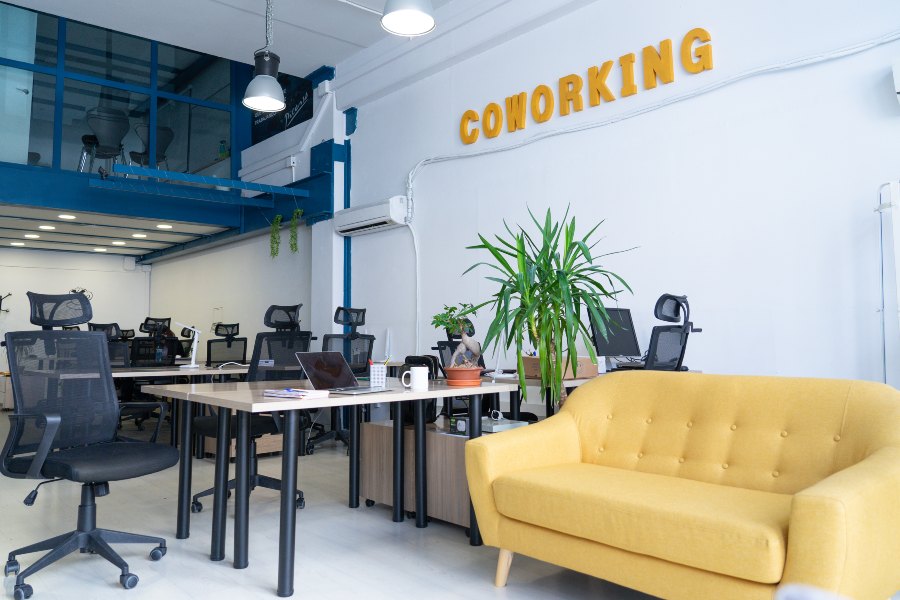
Cost Effectiveness vs Hidden Add-Ons: What Coworking Spaces Offer
Base Membership Costs
Coworking spaces are often marketed as the budget-friendly choice, and for many businesses, they genuinely are. A coworking space offers flexible membership tiers, giving businesses the freedom to pay only for what they need. According to data referenced by Rubberdesk, typical Australian coworking pricing looks like this:
- Hot‑desk memberships commonly cost around $400–$1,100 per person/month, depending on city and location quality
- Dedicated desks commonly cost around $450–$1,000 per person/month, depending on the city and building
- Team spaces for 1-4 people commonly cost around $550–$1,100 per person/month, depending on city and building quality
For solo operators, freelancers, and small teams, these entry-level prices are genuinely competitive. A hot desk booking or dedicated desk membership gives you access to a professional environment, high-speed internet, shared amenities, and often coffee bars, without committing to long-term leases or fit-out costs. Members have access to premium facilities, ergonomic furniture, and collaborative environments that would otherwise cost far more to set up independently.
Where Coworking Costs Start to Climb
Costs can escalate quickly depending on how you use the space, and this is one of the key considerations businesses often overlook. Most coworking spaces charge separately for meeting room access, which is a significant factor for businesses that regularly host client presentations or team sessions. If you’re booking meeting rooms several times a week, those fees add up fast. Similarly, upgrading from a hot desk to a dedicated desk or dedicated space within a coworking environment can push your monthly costs closer to serviced office territory.
Hot desks also come with a practical limitation: availability. During peak hours, your preferred spot may simply not be there, which can disrupt workflow and, in some cases, force additional bookings or upgrades. For businesses that need consistency, a shared office model may not always deliver it.
The Networking Value You Can’t Put a Price On
For small businesses and startups where collaboration and networking opportunities matter as much as cost, coworking spaces offer real value beyond the monthly fee. They foster collaboration naturally, with open layouts and community events designed to bring professionals together.
The community dynamic, working alongside professionals from other businesses and industries, can spark connections that traditional offices and traditional office spaces simply can’t replicate. As noted by the Global Coworking Growth Study 2020, analysts estimated that almost 5 million people would be working from coworking spaces by 2024, underlining how mainstream this model was expected to become.
The True Cost of Serviced Offices in Australia
Fully Furnished and All-Inclusive: But What Does That Actually Cost?
What’s Included in the Monthly Rate
Serviced offices come at a higher base price than coworking memberships, but the all-inclusive model means fewer financial surprises month to month. Unlike traditional offices and traditional office spaces that require businesses to fit out and manage everything themselves, a serviced office is ready from day one. Your monthly rent typically covers:
- Fully furnished offices with ergonomic furniture
- Utilities (electricity, water, air conditioning)
- High-speed internet
- Building maintenance and cleaning
- IT support
- Reception services
- Access to meeting rooms (set hours)
- Mail handling
For businesses that would otherwise be sourcing and managing all of these separately, the bundled cost can actually represent genuine savings compared to a traditional lease.
Australian Pricing: What to Expect
Australian pricing varies considerably by location and team size. Example pricing from provider data shows serviced office space can sit from around $480 per person per month in some locations, with Sydney CBD offices frequently ranging from roughly $1,000 to $1,500 per person per month, depending on building quality and size. A three‑person team in Parramatta, for example, might expect to pay around $1,450 per month, whereas a 33‑seat office in Sydney can run to around $44,979 per month.
For many larger, client-facing teams, serviced offices can be more cost-effective than coworking at scale, especially when you factor in included services, privacy, and meeting room access. Many serviced offices are situated in prime locations, providing a prestigious address and professional image, while others are in fringe or suburban precincts that trade a little prestige for lower costs that support both employee satisfaction and client confidence.
This access to premium facilities, without the overhead of traditional leasing, is a significant drawcard for growing businesses.
Shorter Leases, Less Financial Risk
A significant advantage of serviced offices over traditional leasing is the short-term lease structure. Most serviced office providers offer agreements as short as three months, with 12-month terms typically attracting the best rates. This is a cost-effective solution for businesses that need flexibility without sacrificing professionalism.
Compare this to long-term leases common in traditional leasing arrangements, which typically require a minimum three-year commitment, a daunting proposition for modern businesses navigating uncertain growth trajectories.
Furnished offices also eliminate the need for capital outlay on fit-outs. For businesses expanding into a new market or testing a new prime location, a serviced office offers the professional environment and business address of a permanent office without the financial exposure of traditional office leases.
Need a Professional Address Without the Lease?
Get a prestigious Sydney address, mail handling, and reception services with a virtual office – no long-term commitment required. Contact us today – (02) 9381 9100
Coworking Spaces vs Serviced Offices: Finding Your Best-Value Fit

Matching Your Work Style to the Right Workspace
The right workspace isn’t always the cheapest one. It’s the one that fits how your team actually works. These are the key considerations to help you find your best-value fit:
| Coworking Space | Serviced Office | |
| Best for | Freelancers, startups, remote workers, small teams | Consultants, legal, finance, and client-facing businesses |
| Ideal team size | 1–4 people | 2–50+ people |
| Meeting clients on-site | Occasionally | Regularly |
| Privacy needs | Low to medium | High |
| Budget priority | Lowest entry cost | Predictable all-inclusive cost |
| Lease commitment | Daily to monthly | 3–12 months |
| Networking important? | Yes | Less so |
| Professional address needed? | Nice to have | Essential |
| Scaling quickly? | Easy to scale up or down | Flexible within the same building |
Consider two scenarios: a three-person marketing team that brainstorms well in open collaborative environments and rarely hosts formal client meetings might thrive, and save money, in a coworking space at around $600 per person per month. A three-person legal consultancy that needs confidential client meetings several times a week, a professional business address, and secure document handling would likely find a serviced office the smarter investment, despite the higher base cost.
It’s also worth noting that some businesses don’t need to choose exclusively between the two. A growing company might maintain a serviced office as its primary base while offering coworking memberships to remote employees who need flexible access to a physical office space in other cities, a hybrid arrangement that’s becoming increasingly common among Australian businesses.
Meeting Room Access, Virtual Offices, and Flexible Workspaces
The Often-Overlooked Costs That Change the Equation
Meeting Room Access: More Expensive Than You Think
One of the most important and frequently overlooked cost factors in the offices and coworking spaces debate is meeting room access. Here’s what you need to know:
- In most coworking spaces, meeting rooms are not included in the base membership; they’re booked separately and charged by the hour
- For businesses hosting frequent client presentations, team workshops, or sensitive discussions, those hourly rates compound quickly
- Booking meeting rooms four or five times a week can push your total costs as high as or higher than a serviced office membership
- Most serviced offices include a set number of meeting room hours in the monthly fee, with additional hours available at a reduced rate
- This bundled approach makes cost forecasting far more reliable for businesses with a regular need for private space
Virtual Offices: The Cost-Effective Middle Ground
Another option that often gets overlooked in the physical workspace conversation is the virtual office. A virtual office gives businesses a professional address, mail handling, and access to reception services without the cost of a physical office space. Virtual offices are particularly popular with small businesses, sole traders, and startups that work remotely but need a professional business address and collaboration virtual office facilities for occasional use.
Virtual offices can also be paired with flexible office space access, allowing members to book physical workspace or meeting rooms on demand, a flexible virtual office model that bridges the gap between fully remote and fully office-based working.
Flexible Workspaces: The Hybrid Approach
For modern businesses that want to project a professional image without committing to a permanent office, flexible workspaces represent a genuinely cost-effective solution. Here’s how the hybrid approach stacks up:
| Workspace Type | Best For | Key Benefit |
| Virtual Office | Remote businesses, sole traders, startups | Professional address and mail handling without a physical tenancy |
| Hot Desk (On-Demand) | Occasional office users, travelling professionals | Pay-as-you-go access to a physical workspace |
| Coworking Membership | Small teams needing regular access | Flexible commitment with access to premium facilities |
| Serviced Office | Growing teams needing dedicated space | All-inclusive, move-in ready with a prime location address |
| Hybrid (Virtual + On-Demand) | Remote-first businesses scaling up | Maximum flexibility with a professional image at minimal cost |
Flexible workspaces that combine virtual office services with on-demand physical access are fast becoming the preferred model for agile, growth-minded Australian businesses, particularly those that want the benefits of a prime location without the cost of a full-time tenancy.
More Than Just a Desk: Create, Record, and Grow
Take your business further with access to a professional photography studio and podcast studio – no experience or equipment needed. Call us today – (02) 9381 9100
Serviced Office or Coworking Space: Find the Workspace That Works Harder for Your Budget

The cheapest workspace on paper isn’t always the most cost-effective one in practice. The right choice depends on your team size, work style, privacy needs, and how often you meet clients. A coworking space suits flexible, collaborative teams; a serviced office delivers more value for businesses needing consistency, employee satisfaction, and a professional image.
Once you’re clear on your priorities, the decision becomes straightforward. Explore Workit Spaces’ Sydney coworking and office spaces and speak with the team to find the workspace that works hardest for your budget and your business.